Is Nigeria Ready for More States, or Is Restructuring the Answer?
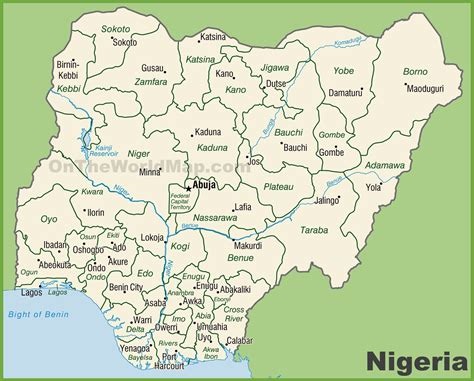 Nigeria, with a population of about 200 million people and 36 states, is currently grappling with questions about state creation and restructuring. While Lagos and Kano are the two most populous states, some observers argue that the existing structure of Nigeria may not be ideal for long-term growth. In terms of population distribution, Nigeria currently has 18 states for every 100 million people, while the United States, with a population of 340 million and 50 states, has 15 states for every 100 million people. Despite Nigeria’s size, states are often seen as created for political rather than economic reasons, raising the question: Does Nigeria need more states, or should the focus shift to restructuring the country’s power system?
Restructuring: A Way Forward for Nigeria
Restructuring involves reorganizing the country’s political and administrative structure. In Nigeria, many argue that there is an imbalance of power concentrated at the federal level, which has hindered local development. Critics of the current federal structure highlight the centralization of authority, which, in their view, has prevented meaningful progress at the state and local government levels.
One major area of concern is the control of resources. For example, the police force in Nigeria is federally controlled, with the Inspector General of Police (IGP) directly answering to the President. State governors, despite being constitutionally designated as the chief security officers of their states, have little control over state police forces. The issue of State Police is a major part of the restructuring debate, as many believe that allowing states to have their own police forces would help tackle insecurity at the local level.
A parallel example of devolution of power can be seen in the United Kingdom and Spain, where powers have been delegated to regions and nationalities. In the UK, for example, Scotland, Wales, and Northern Ireland all have their own legislatures and executives with a range of powers. The 1997 referendum led to the creation of the Scottish Parliament, and devolution has allowed Scotland to manage its own affairs, while still remaining part of the UK. Similarly, the USA maintains decentralized state power, with each state managing its own police force, educational system, and other public services.
Lessons from Global Practices
These international examples suggest that decentralizing power and devolving more authority to local governments can lead to better governance and development. Nigeria‘s six geopolitical zones could similarly be empowered with more control over local resources, such as the Value Added Tax (VAT). Currently, VAT collected across the country is taken by the federal government and distributed without regard for the regions from which it is collected. This has led to resentment, particularly in the Northern regions, where alcohol is prohibited, but VAT from alcohol sales in other regions is shared with them.
In 2021, former Rivers State Governor Nyesom Wike challenged the Federal Government in court over VAT collection, arguing that states should have control over the tax. This case highlights the growing calls for greater autonomy at the state level.
Recent Examples of Restructuring Initiatives
The Federal Government has made some moves towards decentralization. For instance, President Bola Tinubu recently split the Nigeria College of Aviation Technology (NCAT) into six campuses, one for each geopolitical zone. While this move is small in scope, it demonstrates a willingness to distribute power and services more evenly across the country. Additionally, there have been ongoing discussions about allowing states to manage their own electricity distribution and regional resources, ensuring a more localized approach to development.
However, the proposal by the House of Representatives to create 31 new states in Nigeria is being criticized as an inefficient and expensive solution to the country’s challenges. Instead of creating new states, many experts believe that the focus should be on restructuring the political and administrative framework of Nigeria.
Conclusion: A Call for Restructuring, Not More States
In conclusion, the creation of new states in Nigeria seems wasteful, especially given the country’s current economic challenges and dependence on federal allocations. The country’s existing 36 states are already struggling with unsustainable internal revenue and an overreliance on federal funding. Rather than creating more states, Nigeria should focus on restructuring its system by devolving more power to regional governments, such as giving states greater control over VAT revenue, allowing for the creation of state police, and empowering states to manage their own electricity systems. This approach would likely lead to better development, reduced political tension, and a more effective and responsive governance system at the grassroots level.