Court Warns DSS, Utomi Over ‘Shadow Government’ Suit — Invites Legal Heavyweights for National Interest Case
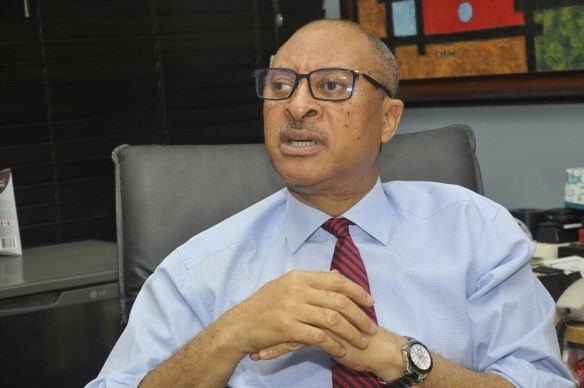 A Federal High Court in Abuja has issued a stern warning to the Department of State Services (DSS) and renowned political economist, Professor Pat Utomi, cautioning both parties to refrain from any action that could undermine an ongoing legal battle over alleged plans to establish a “shadow government” in Nigeria.
Presiding judge, Justice James Omotosho, handed down the caution on Wednesday after the DSS, through its counsel Mr. Akinlolu Kehinde, SAN, raised concerns that Utomi was allegedly pressing ahead with political campaigns and activities despite a pending lawsuit.
DSS Accuses Utomi of Destabilisation Plot
The DSS, in a suit marked FHC/ABJ/CS/937/2025, accuses Utomi of plotting to set up a parallel government, describing the move as a direct attack on the Nigerian Constitution with the potential to destabilise national peace and order.
The agency is seeking an interlocutory injunction to bar Utomi and his associates from organising rallies, protests, or granting media interviews relating to the initiative.
Citing intelligence reports, the DSS claims Utomi has finalised plans to embark on nationwide public campaigns aimed at advancing the alleged shadow government agenda.
National Legal Giants Join Case as ‘Friends of the Court’
Recognising the gravity of the case, Justice Omotosho announced the appointment of at least six distinguished legal experts, representing Nigeria’s six geopolitical zones, to serve as amici curiae (friends of the court). Their role is to provide neutral legal perspectives to guide the court on this nationally sensitive matter.
The appointed legal minds include:
-
Prof. Ademola Popoola, Professor of International Law, Obafemi Awolowo University
-
Prof. Uchefula Chukwumaeze, Vice Chancellor, Imo State University
-
Mr. Joseph Daudu, SAN, former NBA President
-
Mr. Joe Gadzama, SAN, senior legal practitioner
-
Prof. Dakas Dakas, SAN, former Dean, Faculty of Law, University of Jos
-
Mrs. Miannaya Essien, SAN, and
-
Mr. Yakubu Maikyau, SAN, immediate past NBA President
Justice Omotosho emphasised that their submissions would be shared with all parties to ensure fairness and transparency.
DSS Seeks Injunction, Utomi Fights Back
While the DSS urged the court to urgently hear its motion for an interlocutory injunction filed on June 4, Utomi’s legal team, led by Chief Mike Ozekhome, SAN, objected, insisting that the court must first determine the preliminary objection challenging the competence of the suit.
Ozekhome welcomed the court’s decision to invite prominent legal experts, praising the gender-balanced selection. However, he described the DSS’s request for an injunction as an attempt to secure, through the backdoor, reliefs already being contested in the main suit.
Court Orders Caution, Sets July 10 for Hearing
In a decisive ruling, Justice Omotosho declined to entertain the injunction application, opting instead for an accelerated hearing of the substantive suit and the preliminary objection.
“No party should take any step that will render this suit nugatory. Any action taken will be nullified by this court,” the judge warned.
The case was adjourned to July 10, 2025, for hearing.
Utomi Seeks Dismissal of Case
Utomi, a former presidential candidate under the African Democratic Congress (ADC), filed a preliminary objection urging the court to dismiss the DSS suit for lack of jurisdiction.
He argued that the DSS lacks the statutory authority to interfere in constitutionally guaranteed rights such as freedom of expression, association, and political participation, as enshrined in Sections 39 and 40 of the 1999 Constitution (as amended).
“This suit seeks to criminalise civic political engagement, shadow cabinet formation, and public policy discourse, which are legitimate democratic activities,” Utomi contended.
He described the suit as speculative, premature, and an abuse of court process, urging the court to strike it out.
National Spotlight on Landmark Case
With respected legal scholars, Senior Advocates, and university leaders now involved, the case has drawn significant national and international attention.
Political observers say the outcome could set a precedent on the limits of state power in regulating political opposition and civic engagement.