BREAKING: Ex-NBA Spokesperson, Murray SAN Calls for NBA President Osigwe SAN’s Immediate Exit over Scandalous Enugu and Maiduguri Statements
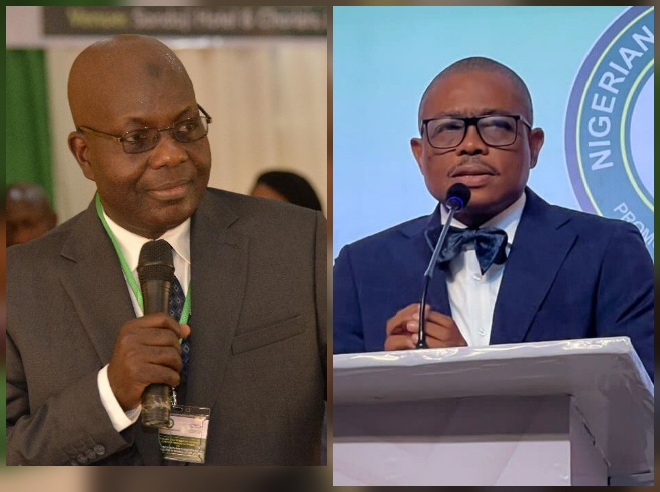
The simmering tensions within the Nigerian Bar Association (NBA) escalated dramatically on Tuesday as former National Publicity Secretary of the Association, Muritala Abdul-Rasheed, SAN, Ph.D, popularly known as Murray, issued a sweeping and uncompromising call for the resignation of NBA President, Mr. Afam Osigwe, SAN, citing what he described as a “loss of moral authority” and a full-blown “institutional emergency.”
In a strongly worded statement titled “Loss of Confidence: The Call for Resignation of the NBA President,” Murray declared that the NBA stands at a “delicate and defining crossroads,” not because of external threats, but due to conduct emanating from the very office “entrusted with safeguarding its moral authority, institutional credibility, and democratic integrity.”
According to him, recent actions and utterances of the NBA President have transcended mere disagreement and now demand “sober reflection and decisive action.”
At the heart of Murray’s intervention is the President’s open declaration at the Maiduguri National Executive Council (NEC) meeting that he “cannot be neutral” in the forthcoming 2026 NBA elections.
Murray described the admission as unprecedented and dangerous.
“For the first time in recent memory,” he noted, “a sitting President openly declared his partisanship in an impending national election, insisting that neutrality was neither possible nor desirable for him.”
He said the declaration came against the backdrop of widespread concern over the circulation of campaign materials at official NBA events, including branded souvenirs and bottled water bearing the name, image, and campaign insignia of a particular aspirant.
The materials, he alleged, were freely distributed to NEC members and placed conspicuously within the meeting venue, including on tables reserved for official use.
“This conduct is not merely symbolic; it is substantive,” Murray stated. “It represents the deployment of institutional platforms, logistics, and ambience in favour of a private electoral interest.”
He warned that the NBA President, as “chief trustee of the Association’s electoral credibility,” cannot abandon neutrality without tainting the process.
“When he abandons neutrality, he does not merely express a personal preference; he taints the process, intimidates dissent, and signals institutional endorsement where none ought to exist,” Murray wrote, adding that an election supervised under the shadow of declared presidential bias “cannot inspire confidence.”
The second development cited by Murray was the President’s public denunciation of the Nigerian Judiciary and legal profession as the “most corrupt” segment of Nigerian society — a remark reportedly made at a public lecture and widely reported in national newspapers.
While acknowledging that corruption remains a serious national problem, Murray described the sweeping characterization as reckless and destructive.
“The Judiciary, despite its imperfections and bad eggs, remains one of the most resilient institutions in Nigeria’s fragile democracy,” he stated, pointing to courageous judgments and the courts’ resistance to authoritarian impulses.
To label the Bench and Bar wholesale as the most corrupt arm of Nigerian society, he argued, was not reformist candour but “destructive hyperbole.”
Murray went further, suggesting troubling motives behind the remarks.
“For an embattled NBA President, already under intense criticism for partisan conduct, to suddenly escalate rhetoric against the Judiciary suggests something more troubling than principled advocacy,” he said.
“It creates the impression of a leader attempting to drag an entire institution into disrepute, perhaps in the hope that shared scandal might dilute personal accountability.”
Beyond the two controversies, Murray questioned the tangible achievements of the current administration after approximately fifteen months in office.
“It is fair and necessary to ask: what tangible achievements define this presidency?” he queried.
According to him, there has been no landmark reform, no enduring institutional innovation, no transformative welfare policy, and no significant advancement in professional regulation.
“What the Bar has witnessed instead is a presidency increasingly defined by controversy, tone-deafness, and disregard for convention,” he wrote.
He stressed that authority in a professional body is “moral before it is constitutional,” and once moral authority is squandered, “the office becomes hollow, no matter how valid the mandate.”
Murray urged the President to resign in the interest of the NBA.
“In mature institutions, resignation is not an admission of guilt; it is an act of responsibility,” he stated. “When a leader becomes a lightning rod for division, distrust, and institutional embarrassment, stepping aside becomes a service, not a failure.”
He maintained that resignation would allow the NBA to “regain equilibrium ahead of a critical election.”
Failing that, he called on the Board of Trustees (BoT) to intervene decisively, reminding members that the BoT exists precisely to safeguard the Association in moments of crisis.
Murray also invoked the painful memory of the 1992 NBA impasse, which plunged the Association into years of stagnation before eventual revival, warning against a repeat of history.
In one of the most pointed sections of his statement, Murray accused the President of repeatedly prioritising personal interest over institutional responsibility.
“At critical moments demanding restraint, balance, and statesmanship, he has instead chosen self-assertion and self-preservation,” he wrote.
He argued that whether in the declaration of partisanship or in what he described as reckless rhetoric against the Judiciary, “the guiding impulse has been the same — self first, institution later.”
Such a mindset, he said, is fundamentally incompatible with the office.
“Institutions do not grow on ego; they grow on sacrifice, discipline, and a deep appreciation of history and consequence,” he declared.
Concluding his intervention, Murray insisted that the issue transcends personalities and is about preserving the dignity of Africa’s largest body of lawyers.
“It is about protecting the sanctity of its elections, the credibility of its leadership, and the fragile trust between the Bar, the Bench, and the public,” he said.
He asserted that a President who declares partisan allegiance, weaponizes institutional platforms, publicly denigrates the Judiciary, and leaves no tangible legacy has “forfeited the moral licence to continue in office.”
“The honourable path is resignation. The responsible path, if resignation fails, is removal,” he concluded.
READ THE MURRAY STATEMENT BELOW
Loss of Confidence: The Call for Resignation of the NBA President By Muritala Abdul-Rasheed, SAN, Ph.D
The Nigerian Bar Association (NBA) stands today at a delicate and defining crossroads. Not because of external assault on the profession, but because of conduct emanating from the very office entrusted with safeguarding its moral authority, institutional credibility, and democratic integrity.
Recent actions and utterances of the President of the NBA, Mr. Afam Osigwe, SAN, have raised grave concerns across the Bar and beyond, concerns that now transcend disagreement and rise to the level of institutional emergency.
Two developments, taken together, compel sober reflection and decisive action. First is the President’s open and unapologetic declaration at the Maiduguri National Executive Council (NEC), meeting that he “cannot be neutral” in the forthcoming 2026 NBA election. Second is his subsequent public denunciation of the Nigerian Judiciary and legal profession as the “most corrupt” segment of Nigerian society, a statement delivered at a public lecture and widely reported in the national press.
Individually, each incident is troubling. Collectively, they present a portrait of leadership unhinged from restraint, discretion, and responsibility. The question before the Bar is no longer whether these actions are inappropriate, it is whether a President who so conducts himself remains fit to continue in office.
Partisanship from the presidency: A dangerous precedent
The Maiduguri NEC meeting marked a watershed moment in the governance history of the NBA. For the first time in recent memory, a sitting President openly declared his partisanship in an impending national election, insisting that neutrality was neither possible nor desirable for him.
This brazen admission was not made in a vacuum. It came against the backdrop of growing concern over the open circulation of campaign materials at official NBA events, including branded souvenirs and bottled water prominently bearing the name, image, and campaign insignia of a particular aspirant.
These items were reportedly distributed freely to NEC members and placed conspicuously within the meeting venue, including on tables reserved for official use.
Such conduct is not merely symbolic; it is substantive. It represents the deployment of institutional platforms, logistics, and ambience in favour of a private electoral interest. In any democratic association, this would raise red flags. In a body of lawyers, sworn to fairness and due process, it is nothing short of scandal.
The NBA President is not a factional leader. He is the chief trustee of the Association’s electoral credibility. His words, actions, and silences carry weight.
When he abandons neutrality, he does not merely express a personal preference, he taints the process, intimidates dissent, and signals institutional endorsement where none ought to exist.
An election supervised under the shadow of declared presidential bias cannot inspire confidence, no matter how procedurally sound it purports to be.
The second faux pas: Taking the bar and bench to the cleaners
If the Maiduguri episode raised eyebrows, the President’s subsequent public remarks on the Judiciary shocked the conscience of the profession.
Speaking at a public lecture, the NBA President reportedly described judges and lawyers as the “most corrupt Nigerians”, asserting that justice has become a commodity auctioned to the highest bidder. While corruption is undeniably a serious national challenge, the recklessness of such sweeping condemnation from the President of the Bar cannot be overstated.
The Judiciary, despite its imperfections and bad eggs, remains one of the most resilient institutions in Nigeria’s fragile democracy. It has produced courageous judgments, resisted authoritarian impulses, and repeatedly served as the last refuge of citizens against executive lawlessness. To label it, wholesale, as the most corrupt arm of Nigerian society is not reformist candour; it is destructive hyperbole.
For an embattled NBA President, already under intense criticism for partisan conduct, to suddenly escalate rhetoric against the Judiciary suggests something more troubling than principled advocacy. It creates the impression of a leader attempting to drag an entire institution into disrepute, perhaps in the hope that shared scandal might dilute personal accountability.
Leadership without results, authority without restraint
Leadership is ultimately judged by outcomes. After approximately fifteen months in office, it is fair and necessary to ask: what tangible achievements define this presidency?
There is no landmark reform credited to it. No enduring institutional innovation. No transformative welfare policy and no significant advancement in professional regulation.
What the Bar has witnessed instead is a presidency increasingly defined by controversy, tone-deafness, and disregard for convention.
Authority in a professional body is moral before it is constitutional. Once moral authority is squandered, the office becomes hollow, no matter how valid the mandate.
The case for resignation, and for intervention
In mature institutions, resignation is not an admission of guilt, it is an act of responsibility. When a leader becomes a lightning rod for division, distrust, and institutional embarrassment, stepping aside becomes a service, not a failure.
The NBA President ought, in the interest of the Association, to resign honourably and allow the institution to regain equilibrium ahead of a critical election. Anything short of this prolongs instability and deepens suspicion.
Should he fail to do so, the Board of Trustees (BoT) of the NBA must intervene decisively. The BoT exists precisely for moments like this, to safeguard the Association when its core values are imperilled.
History offers a sobering reminder of what happens when internal crises are mishandled. The 1992 NBA impasse plunged the Association into years of stagnation and near-moribund existence before eventual revival.
NBA President’s recurrent penchant for prioritisation of self interest
Beyond the immediate controversies, a troubling and consistent pattern emerges. The NBA President has repeatedly placed personal interest above institutional responsibility.
At critical moments demanding restraint, balance, and statesmanship, he has instead chosen self-assertion and self-preservation. Whether in his ill-considered declaration of partisanship in an election he is duty-bound to midwife impartially, or in his reckless rhetoric that drags the Judiciary into the mud to deflect attention from his own leadership failures, the guiding impulse has been the same self first, institution later.
Such a mindset is fundamentally incompatible with the office he occupies.
Institutions do not grow on ego, they grow on sacrifice, discipline, and a deep appreciation of history and consequence.
The Nigerian Bar Association, as a custodian of professional ethics and a moral compass for the legal profession, cannot thrive under a leadership culture that treats the Association as an extension of personal ambition.
Conclusion: Saving the office by letting go of the occupant
This moment is bigger than personalities. It is about preserving the dignity of the Nigerian Bar Association as Africa’s largest body of lawyers. It is about protecting the sanctity of its elections, the credibility of its leadership, and the fragile trust between the Bar, the Bench, and the public.
A President who declares partisan allegiance, weaponizes institutional platforms, publicly denigrates the Judiciary, and leaves no tangible legacy behind has forfeited the moral licence to continue in office.
The honourable path is resignation.The responsible path, if resignation fails, is removal.
Anything else risks reducing the NBA Presidency from a symbol of leadership to a theatre of controversy, and that is a price the legal profession must refuse to pay.
Muritala Abdul-Rasheed, SAN, Ph.D aka Murray, is a former National Publicity Secretary, Nigerian Bar Association (NBA)