How Nigerian lawyers became bagmen for judicial corruption by Prof. Gideon Christian
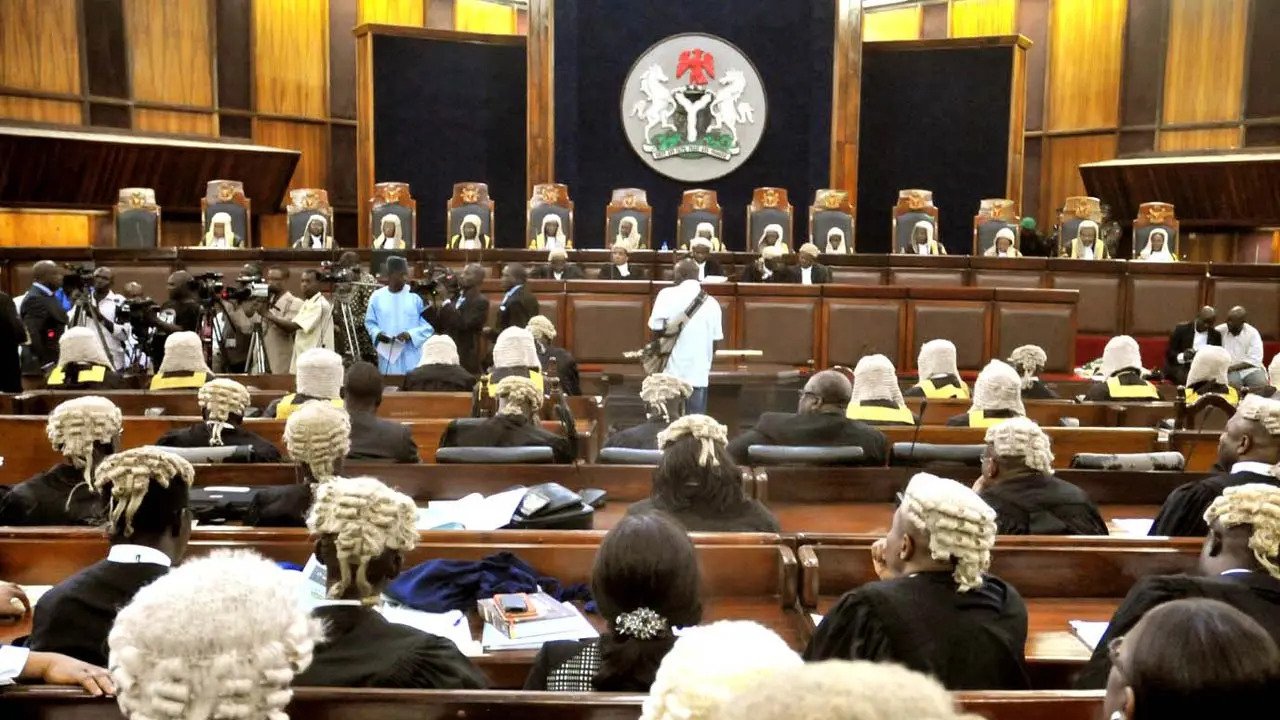
In Nigeria’s courtrooms, justice is meant to speak through law, reason, and evidence. Yet, as Nigerian Bar Association (NBA) President Afam Osigwe recently warned, another voice is competing for authority: the rustle of “fat envelopes.” His stark remark that envelopes now rival evidence is more than metaphor; it is an indictment.
It evokes a justice system where truth presents its case, but cash delivers the verdict. The image is both poetic and chilling: the scales of justice tipped not by law, but by currency, conveyed not by shadowy fixers but by officers of the court themselves — lawyers.
This is not a marginal scandal. It is a moral emergency at the heart of Nigeria’s justice system. Lawyers are sworn to defend justice and uphold the integrity of judicial processes. Yet mounting reports, prosecutions, and public commentary suggest that some have instead become conduits of corruption—brokers of influence, negotiators of outcomes, and, in the most cynical cases, bagmen delivering bribes to judicial officers. If judges are the face of justice, lawyers are its bloodstream. When the bloodstream is contaminated, the system collapses.
A justice system under siege
Judicial corruption in Nigeria is neither speculative nor new. The 2016 State Security Service raids on judges’ homes shocked the nation when large sums of cash in local and foreign currencies were reportedly recovered. The constitutional controversies that followed did not obscure the more serious damage: public confidence in the judiciary suffered a profound blow. Subsequent prosecutions and disciplinary proceedings involving judicial officers reinforced public suspicion that judicial outcomes could be influenced.
Yet judges do not operate in isolation. Corrupt judicial ecosystems require intermediaries, and no intermediary is more strategically positioned than the lawyer. For decades, litigants across Nigeria have heard the same coded assurances: “We can arrange it.” “The judge is reachable.” “We need to settle.”
These phrases rarely refer to a settlement between parties. They signal access. Court corridors whisper of lawyers who claim proximity to judges and promise favourable outcomes. Clients are asked for “facilitation” or “settlement” payments, while success is framed not as a matter of legal merit but of financial persuasion.
Former National Human Rights Commission Chairman Chidi Odinkalu has repeatedly warned that institutional decay thrives when professional accountability collapses. His writings underscore how the justice system is weakened not only by corrupt judges but by legal actors who enable corruption. Clients who resist are warned that their cases may suffer. In this environment, advocacy becomes brokerage and ethics become negotiable.
Dele Farotimi, in his critique of Nigeria’s criminal justice system, describes institutions warped by elite capture and systemic impunity. His analysis points to a central truth: corruption persists not only because individuals act wrongly, but because systems tolerate wrongdoing without consequence.
When Senior Lawyers Become Intermediaries
Perhaps the most disturbing feature of Nigeria’s judicial corruption scandals is that they frequently involve senior members of the Bar — lawyers expected to be custodians of professional ethics.
The prosecution of Rickey Tarfa, SAN, revealed allegations that he attempted to improperly influence judicial proceedings and obstruct justice, including accusations of communicating with a judge inappropriately. Although the case involved complex legal contests and denials, the spectacle of a Senior Advocate of Nigeria standing trial over alleged interference with judicial processes shook public confidence.
Similarly, Joseph Nwobike, SAN, was convicted by a Lagos High Court in 2018 for attempting to pervert the course of justice by offering inducements to court officials. Though the conviction was later overturned on appeal, the facts ventilated in court exposed disturbing practices involving payments to judicial staff to manipulate case assignments.
The case involving Joe Agi, SAN, and former Federal High Court judge Adeniyi Ademola further illuminated the murky intersections between the Bar and the Bench. Agi was accused of giving substantial sums of money to the judge, allegedly framed as personal assistance. While both men were acquitted, the revelations that emerged during the trial reinforced public suspicions about proximity, access, and influence.
Equally troubling was the prosecution of Godwin Obla, SAN, alongside Justice Rita Ofili-Ajumogobia for bribery and unlawful enrichment allegations. Though the proceedings encountered procedural turns and ultimately ended in discharge, the case exposed troubling allegations of financial transactions between senior legal actors and judicial officials.
These cases share a common and unsettling theme: allegations of judicial compromise are not confined to obscure actors. They often involve some of the most senior, decorated, and influential members of the legal profession in Nigeria.
“Ghana Must Go” Jurisprudence
In Nigeria’s popular vocabulary, “Ghana Must Go” bags symbolise illicit cash transactions. Within the Nigerian justice sector, the phrase has become shorthand for purchasable outcomes. In a legal system, jurisprudence evolves from judicial decisions grounded in the reasonable application of law to fact. But when decisions are shaped by illicit payments rather than legal reasoning, the result is not principled jurisprudence, but a “Ghana Must Go” jurisprudence – a body of case law distorted by money instead of legal doctrine, and profoundly dangerous to the integrity, predictability, and moral authority of any legal system.
Osigwe’s remark resonates precisely because it aligns with public perception: that legal arguments matter less than financial weight. Even where judges act with integrity, suspicion alone is corrosive. Justice must not only be done; it must be seen to be done. When citizens assume outcomes are purchased, the legitimacy of the courts collapses, and the courtroom becomes a marketplace.
Nigeria’s justice system operates under structural pressures: overloaded dockets, prolonged delays, procedural complexity, and weak disciplinary enforcement. Delay breeds desperation. Uncertainty invites manipulation. When cases stretch across years, litigants seek certainty; lawyers facing competitive pressures and financial incentives may present influence as a service.
Corruption perception surveys in Nigeria consistently show deep distrust in justice institutions. Where citizens believe justice is purchasable, attempts to purchase it multiply. Corruption becomes normalised.
Professional complicity and silence
Osigwe’s public admission is extraordinary — an insider giving voice to what litigants have long whispered. But by pointing an accusing finger at the judiciary, the remaining fingers inevitably turn toward the Bar he leads. This raises a harder and unavoidable question: what is the Nigerian Bar Association doing to confront the rot within its own ranks?
Lawyers are not peripheral actors in judicial corruption; they are often its indispensable intermediaries. The day lawyers refuse to serve as conduits and bagmen for corrupt judges is the day judicial corruption will suffer a decisive blow in Nigeria. It is one thing to lament systemic decay in the judiciary; it is another to confront, with equal courage, the decay within the Bar itself.
Professional self-regulation cannot survive on bombastic rhetoric. If the NBA does not police its own, judicial corruption will continue to thrive.
The Rules of Professional Conduct prohibit bribery and improper communication with judges. Yet enforcement remains sporadic and opaque. Young lawyers who speak up or refuse to participate risk professional isolation. Colleagues remain silent. Professional solidarity becomes a shield for misconduct. Silence becomes complicity.
Judicial corruption is not abstract. It produces casualties. Commercial disputes resolved through bribery deter foreign investment. Electoral judgments tainted by influence undermine the legitimacy of any government. Land disputes resolved corruptly fuel conflict.
But the most brutal injustice falls on the poor. The wealthy can afford “fat envelopes”; the poor cannot. A corrupted justice system institutionalises inequality.
Reclaiming the soul of the profession
Nigeria’s legal profession is not defined by its worst actors. Thousands of lawyers serve with integrity and courage. Yet the profession must confront a hard truth: corruption thrives within its ecosystem.
Reform must begin with swift and public disciplinary enforcement. Lawyers acting as bagmen of judicial corruption must face prosecution and professional sanctions, regardless of status. Transparency in disciplinary proceedings is essential so the public can see accountability in action.
Digitising court processes can reduce unnecessary contact between lawyers and court officials, thereby enabling influence peddling. Whistleblower protections must shield lawyers and court staff willing to expose corruption. The NBA must institutionalise ethics audits and monitoring, replacing episodic outrage with systemic oversight.
Conclusion
The rule of law cannot survive where the fatness of envelopes outweighs evidence. When lawyers become bagmen of judicial corruption, they betray their clients, their oath, and the rule of law. They transform courtrooms into auction houses.
Osigwe’s warning must not fade into another news cycle. It must trigger a reckoning. Nigeria’s judiciary is often described as the last hope of the common man. That hope cannot rest on envelopes. It must rest on integrity.
Every Nigerian lawyer now faces a moral crossroads: remain a custodian of justice or become a bagman of corrupt judges. History will record your choice. And the nation will live with its consequences.
– Gideon Christian is a professor of ethics at the Faculty of Law, University of Calgary, Canada. He is the recipient of the 2026 CBA (Alberta) and Law Society of Alberta Distinguished Service Award. His website: www.gideonchristian.ai