Judicial Reform: NBA’s unheeded proposal to restructure NJC
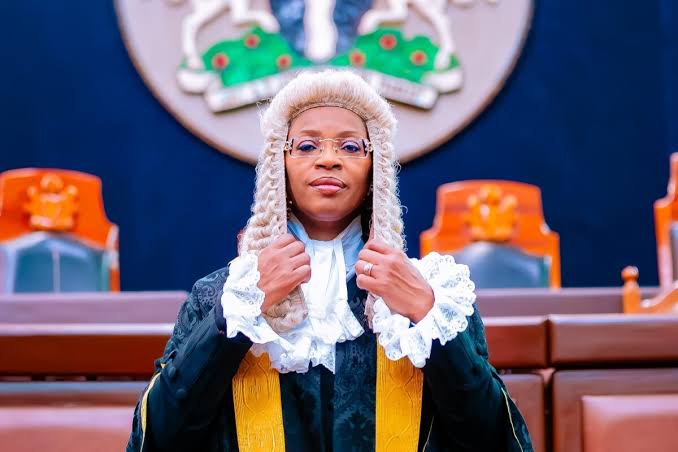
About two and a half years ago, precisely in April 2024, the Nigerian Bar Association (NBA) proposed a bold reform to remove the Chief Justice of Nigeria, CJN, as the statutory chairman of the National Judicial Council, NJC.
The NBA, as the umbrella body of legal practitioners in the country, faulted the composition of the Council, which is saddled with the responsibility of disciplining erring judicial officers.
It not only challenged the current system, which mandates that the Council be headed by the CJN, but also demanded a review of its composition.
According to the NBA: “The inherent flaws in the composition of the NJC impact negatively on its ability to prosecute judicial misconduct in a manner that inspires public confidence.”
As part of its recommendations, the Bar proposed that the NJC be constituted as follows: six judicial officers appointed by the CJN; six lawyers nominated by the National Executive Council of the NBA, including the NBA President; and six non-lawyers appointed by the President of the Federal Republic of Nigeria, subject to Senate approval.
“The Chairmanship of these bodies should be rotated between the heads of the three constituent groups,” the NBA insisted.
Furthermore, the association recommended appointing court administrators to assume the administrative functions currently performed by the heads of court, including procurement, budgeting, court renovation, and the implementation of judicial appropriations. “These are activities within court administration that have severally been identified by the anti-corruption bodies as areas prone to corrupt activities.
“This proposal for the creation of this office takes cognizance of the role of the Chief Registrars of courts who will under the proposed arrangements enable them (together with heads of courts) to concentrate solely on the business of adjudication especially case management without distraction.”
The recommendations were contained in proposals the NBA submitted at a national summit on Justice Sector reforms. The Chairman of the Joint Planning Committee of the summit, Dr. Babatunde Ajibade, SAN, had, at that time, told newsmen that the reform proposals were considered and approved in modified form.
“The general consensus reached by this panel was that the role of the NJC in discharging its responsibility for judicial appointments into the Superior Courts of Record required significant review.
“There was a concern expressed about the fact that the CJN, who is the chairman of the NJC is also the chairman of the Federal Judicial Service Commission, which is the body that initially reviews proposals or lists of candidates for appointment into judicial office.
“The members pointed out the seeming inconsistency between the CJN playing both those roles, as it would appear that he was then recommending candidates to himself being chairman of both bodies, and being the person who appoints a significant number of the members of both bodies other than those who are statutory members.
“There was a general consensus that there was a need to reconstitute or propose the reconstitution of these bodies, both the NJC and the FJSC,” Ajibade, SAN, stated.
However, years after the recommendations were made, both the NJC and the FJSC have remained structurally unchanged.
The NJC was established under Section 153 of the 1999 Constitution, as amended, to safeguard the independence of the judiciary and ensure accountability in judicial administration.
It was created as a replacement for the Advisory Judicial Committee (AJC), a legal body that operated during the military era, at a time when the judiciary had far less structural and administrative independence.
With the return of the country to constitutional democracy, the NJC became the top judicial oversight organ, headed by the CJN, with its membership including the next most senior Justice of the Supreme Court; the President of the Court of Appeal; retired justices; various heads of courts; members of the NBA; and two non-lawyers of unquestionable integrity.
Under the provisions of Paragraph 21 of Part One of the Third Schedule to the 1999 Constitution, as amended, the Council, among other things, recommends those to be appointed judges, as well as the removal from office of judicial officers found to have compromised standards in the discharge of their duties.
The NJC makes such recommendations both to the President for judges under the Federal Judicial Service Commission (FJSC) and to Governors for judicial officers under the State Judicial Service Commissions.
It is also the responsibility of the Council, through its committee, to periodically evaluate the performance of judges to ensure that the justice needs of citizens are duly met.
Over the years, however, critics have called for a review of both the powers and composition of the NJC, citing its increasing failure to discharge its mandate effectively.
A key area of concern is the judicial recruitment process, with critics arguing that unfit persons continue to be appointed, many of them either children of serving or retired judicial officers, or individuals loyal to people within the corridors of power.
Critics insist that this has contributed to the poor quality of judicial decisions, often manifesting in conflicting judgments accompanied by allegations of bribery and corruption.
The NJC is considered structurally weak: its members serve part-time, petitions are often decided at a snail’s pace, and sanctions feel token relative to the scale of corruption allegations.
Notwithstanding the criticisms, the Council has periodically sacked or recommended the removal of judges for misconduct, and set up dedicated disciplinary machinery.
In what appears to be the first major sweep to root out rotten eggs on the bench, the NJC, in a landmark resolution following its 111th meeting on May 13, 2026, queried 256 judges over various performance-related issues.
It also suspended two High Court judges for one year without pay for misconduct and for breaching the right to a fair hearing.
These developments followed renewed efforts by the CJN, Justice Kudirat Kekere-Ekun, to cleanse the Augean stable.
Justice Kekere-Ekun declared her zero tolerance for corruption when she appeared before the Senate for screening as the 23rd substantive CJN on September 25, 2024.
True to her word, and in a clear departure from the old format, publication of the list of candidates shortlisted for appointment to the bench became mandatory.
This paved the way for the public to blow the whistle on candidates with a deficit in their integrity quotient.
Despite this initiative, calls for swifter action to guarantee accountability from the bench grew louder.
It is not surprising that President Bola Tinubu had, in his 2023 manifesto, pledged to review the mandate and composition of the NJC.
He said his administration would reposition the Council “to make it tougher and more effective in dealing with corruption, malpractice and incompetence in the administration of justice.”
He had also proposed that the mandate of the NJC be limited to federal courts.
However, more than three years into his administration, no changes have been made in either the composition or operations of the Council, even though President Tinubu himself has repeatedly acknowledged the need for reforms.
He had, on November 17, 2025, urged the judiciary to take decisive action to address questions about its integrity, warning that justice must never be for sale.
“Corruption in any arm of government weakens the nation, but corruption in the Judiciary destroys it at its core.
“When justice is compromised, governance loses its integrity, and democracy loses its foundation,” President Tinubu stated as he flagged off the 2025 All Nigerian Judges Conference of the Superior Courts in Abuja.
While acknowledging the concerns raised by President Tinubu, the CJN pledged action to restore public confidence in the judiciary.
“On the persistent issue of corruption, we can no longer afford to regard our institution as beyond scrutiny. We must admit, with candour, that there are some within our ranks who have undermined the integrity of the Bench. This must change,” the CJN added.
Although she did not attempt to conceal the rot within the judiciary, she warned against blanket allegations of corruption, insisting such claims be supported by evidence.
CULLED FROM VANGUARD