CJN to Judges: Resist Political Pressure, Manipulation of Judicial Process
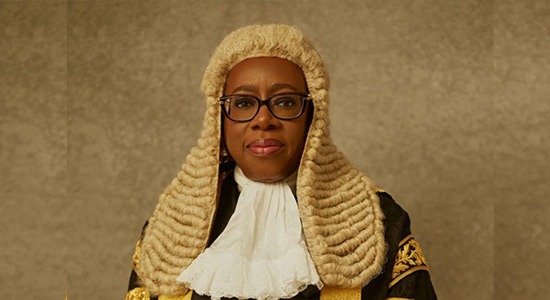
As political activities gather momentum ahead of the 2027 general elections, the Judiciary faces a critical test.
Will it withstand pressure from politicians seeking favourable court decisions without compromising its impartiality?
Chief Justice of Nigeria (CJN) Justice Kudirat Kekere-Ekun expects the Judiciary not to yield to such intense pressures.
She has, therefore, warned judges against partisanship, urging heads of courts to be vigilant against forum shopping, concealment of related proceedings and attempts to secure conflicting orders from courts of coordinate jurisdiction.
Judges must also remain impartial in handling electoral disputes and ensure that the cases are handled competently, expeditiously and strictly in accordance with the law.
Public confidence in the Judiciary will be tested as political activities intensify, Justice Kekere-Ekun stressed at a three-day roundtable for heads of court organised by the National Judicial Institute (NJI) in Abuja from October 26 to 28.
Its theme was: “Leading judicial transformation sustainably: Strengthening leadership, autonomy and public confidence.”
The event brought together heads of courts and other stakeholders to examine challenges confronting the Judiciary and identify practical measures to improve the administration of justice.
The roundtable featured five discussion sessions on judicial leadership, institutional collaboration, judicial independence, court governance, case management, relations between heads of courts and other judges, and accountability.
The first session examined stakeholder engagement and institutional collaboration for sustainable judicial transformation.
It was moderated by the Chief Judge of Zamfara State, Justice Kulu Aliyu, and featured representatives of the Independent Corrupt Practices and Other Related Offences Commission, the Nigerian Financial Intelligence Unit, the Nigeria Police Force, the Nigerian Bar Association, the Federal Ministry of Justice, the Economic and Financial Crimes Commission and the Nigerian Correctional Service.
A session on safeguarding judicial independence under pressure was moderated by Supreme Court Justice John Okoro.
Panellists included the President of the National Industrial Court of Nigeria, Justice Benedict Kanyip; the Chief Judge of Osun State, Justice Oyebola Oji; and Prof. Adedeji Adekunle (SAN) of the Juritrust Centre for Socio-Legal Research and Documentation.
Another session, on court governance, strategic planning and case-flow management, was coordinated by the Chief Judge of Lagos State, Justice Kazeem Alogba.
Panellists included the Chief Judge of Delta State, Justice Theresa Diai; the Grand Kadi of the Kwara State Sharia Court of Appeal, Kadi Abdulateef Kamaldeen; the President of the Benue State Customary Court of Appeal, Justice Cosmas Idye; and the Executive Secretary of the National Judicial Council, Ahmed Saleh.
The third day’s sessions examined the relationship between heads of courts and other judges, as well as leadership for performance, accountability and public confidence.
They were moderated by the Chief Judge of Borno State, Justice Kashim Zannah, and the Chief Judge of Rivers State, Justice Simeon Amadi.
’Scrutinise applications carefully’
The CJN stressed the need for judicial officers to discharge their constitutional responsibilities with impartiality, courage and fidelity to the law, regardless of political sensitivities, public sentiment or pressure from any quarter.
She said judges must prioritise the Constitution, the Electoral Act and applicable rules of court over the urgency with which cases are presented or the interests of the parties involved.
Justice Kekere-Ekun also urged heads of courts to ensure that appropriate administrative arrangements were in place for the timely and orderly handling of election-related cases.
“Judicial officers must be reminded of the need to scrutinise applications carefully, insist on full and frank disclosure of relevant facts, pay due regard to related proceedings and resist any attempt to use urgent applications or ex parte orders to secure an improper advantage,” she said.
The CJN described forum shopping as particularly damaging to the administration of justice because it undermines consistency, encourages abuse of court processes and exposes the Judiciary to avoidable public controversy.
“Your lordships must, therefore, ensure that existing procedural safeguards are observed and that appropriate steps are taken whenever attempts to circumvent established judicial processes come to light.
“No litigant should be permitted to manipulate the judicial system in search of a favourable decision. Public confidence in the Judiciary will be tested during this period,” she said.
She urged heads of courts to provide the leadership needed to ensure that election-related disputes were resolved in accordance with the law, adding that courts must remain impartial arbiters guided solely by the facts, applicable law and the demands of justice.
Leadership beyond adjudication
Justice Kekere-Ekun reminded heads of courts that their responsibilities extended beyond adjudication to include the administration of court business, supervision and development of judicial officers, resource management and maintenance of professional standards.
She said the effectiveness of any court depended substantially on the quality of its leadership, the soundness of its administrative arrangements and the consistency with which established standards were enforced.
According to her, the quality of judicial leadership should ultimately be measured by the improvements it brings to the daily administration of justice.
Tackling delays in the courts
The CJN urged heads of courts to introduce measures to ensure the prompt determination of cases, identifying delays as one of the major challenges confronting the nation’s justice system.
She said delays imposed financial and emotional burdens on litigants, diminished the practical value of judicial remedies and weakened public confidence in the Judiciary.
While acknowledging that inadequate funding, infrastructure and judicial manpower contributed to delays, she said other causes could be addressed through effective administration.
These, she noted, included inefficient docket management, repeated adjournments, poor scheduling and failure to monitor inactive cases.
“Every Head of Court should have a clear understanding of the condition of the court’s docket, including the number of pending cases, their age, the categories experiencing the greatest delays and the reasons for their continued pendency,” she said.
She urged heads of courts to use such information to develop realistic strategies for reducing backlogs, improving the allocation of hearing dates and ensuring that concluded matters were promptly removed from active dockets.
However, Justice Kekere-Ekun cautioned against sacrificing the quality of justice on the altar of speed, stressing that efficiency should not be measured solely by the number of cases disposed of.
She said cases must be determined fairly, competently and within a reasonable time, with the right to fair hearing fully protected.
Punctuality, communication and respect for court users
The CJN identified punctuality, timely communication and respectful treatment of litigants and lawyers as essential aspects of court administration that directly influenced public perceptions of the Judiciary.
She said litigants and lawyers were entitled to expect courts to make reasonable efforts to commence proceedings at scheduled times.
“Judicial officers must recognise that punctuality is a mark of discipline and respect for the time of others.
”Persistent delays in commencing proceedings, without adequate explanation, impose unnecessary costs on litigants and counsel, disrupt professional schedules and diminish confidence in the administration of justice,” she said.
She urged heads of courts to communicate clear expectations on sitting times, monitor compliance and address persistent or unjustified lateness through established supervisory and administrative processes.
“Punctuality must be treated as a professional obligation, not a matter of personal preference,” she added.
On communication, Justice Kekere-Ekun said litigants and lawyers should be notified promptly whenever a court sitting was cancelled or postponed.
She described it as unacceptable for lawyers and litigants to travel long distances and incur expenses only to discover on arrival that a court would not sit when timely notification could have prevented the inconvenience.
She urged heads of courts to ensure that registries had reliable procedures for communicating changes to scheduled sittings, identifying responsible officers and the channels through which affected parties should be notified.
The CJN also stressed the need for judges to treat lawyers and litigants with dignity, regardless of their social status, financial means, educational background or the nature of their cases.
While emphasising the need to preserve the authority of the Bench, she said judicial authority should be exercised with fairness, composure and respect.
“Firmness and courtesy are entirely compatible. A judge can control proceedings effectively without humiliating counsel or a litigant; a court can insist on discipline without resorting to discourtesy,” she said.
She urged heads of courts to communicate appropriate professional standards to judges in their jurisdictions and ensure that complaints about discourteous or inappropriate conduct received proper attention.
Persistent breaches, she said, should be addressed through applicable administrative or disciplinary procedures.
Transparent judicial appointments, mentorship
Justice Kekere-Ekun stressed the need to preserve the integrity of judicial appointments through fair, transparent and merit-based selection processes.
She urged heads of courts to resist external pressure and ensure that appointments were guided by objective criteria, competence, character and suitability for judicial office.
“Public confidence in the Judiciary depends, in part, on the assurance that those entrusted with judicial office have emerged through rigorous and credible processes,” she said.
The CJN also called for structured mentorship programmes under which experienced judicial officers would guide newly appointed judges before they began sitting independently.
She said such arrangements would enable new judges to gain practical experience in judicial administration, courtroom management and the demands of judicial office.
She further urged heads of courts to foster professional workplaces free from bullying and harassment, where independent thought, reasoned disagreement and legitimate professional concerns could be expressed without fear of humiliation or retaliation.
Investment in judicial personnel
The CJN advocated sustained investment in judicial officers and other personnel, describing their welfare as an essential component of responsible institutional management.
She said the contributions of registrars, research staff, administrative officers, information technology personnel and other court employees should not be overlooked.
Their effectiveness, she added, depended on appropriate training, clear procedures, competent supervision and accountability.
Justice Kekere-Ekun also observed that public confidence could not be secured through pronouncements alone but had to be earned through consistent demonstrations of fairness, integrity, competence and respect for the law.
She urged heads of courts to pay close attention to the experiences of court users, noting that interactions at registries and the conduct of proceedings in courtrooms shaped public perceptions of the Judiciary.
“Clear procedures, reliable information, courteous treatment, punctual sittings and timely communication when changes occur are not minor administrative considerations.
“They are practical expressions of respect for the people the courts exist to serve,” she said.
Explaining the importance of the gathering, NJI Administrator Justice Babatunde Adejumo said it provided participants with an opportunity to examine issues central to the Judiciary’s progress and development.
The immediate past President of the National Industrial Court said the roundtable offered heads of courts a platform to exchange candid views, identify common challenges, develop solutions and strengthen relationships across jurisdictions to improve the Judiciary’s impact.