Africa’s Biggest Refinery Eyes Stock Market Debut by Late 2026 – Dangote
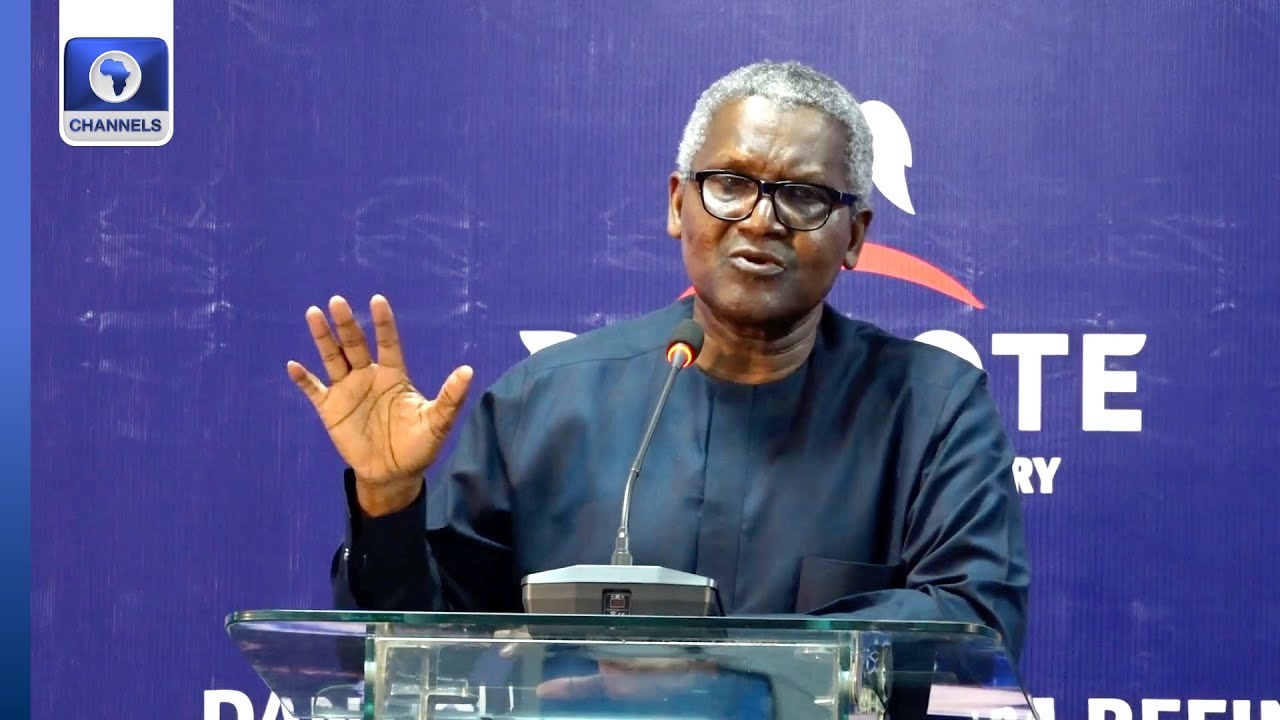
Aliko Dangote, President of the Dangote Group and Africa’s richest man, has revealed plans to list his $20 billion crude oil refinery on the stock market by the end of 2026. The move is aimed at broadening investor participation and dispelling concerns about monopoly, according to a Bloomberg report.
Speaking at the annual general meeting of the African Export-Import Bank in Abuja, Dangote also disclosed that the group’s urea fertilizer plant, with an annual production capacity of 2.8 million tons, will be listed later this year.
The refinery, located just outside Lagos, is Africa’s largest and can process up to 650,000 barrels of crude oil per day. It currently produces aviation fuel, diesel, gasoline, and naphtha.
“It’s important to list the refinery so that people won’t call us a monopoly,” Dangote said. “Once it’s listed, everyone can buy shares and have a stake in it.”
He added that a public listing, likely through an initial public offering (IPO), could attract institutional investors, including government-owned pension funds.
Originally, Dangote had planned to build a 5,000-ton steel plant following the refinery’s launch, but he shelved the idea amid monopoly criticisms. However, he remains committed to expanding the group’s footprint in other sectors.
During the meeting, Dangote reaffirmed his ambition to make Nigeria and Africa self-sufficient in fertilizer production within the next 40 months. His group already operates Africa’s largest granulated urea complex, which produces 3 million tons annually and exports 37% of its output to the United States.
“With the expansion of our $2.5 billion plant on the outskirts of Lagos, Africa will stop importing fertilizer within 40 months,” he stated. “Our goal is to surpass Qatar and become the world’s largest urea exporter.”
Africa currently imports over six million metric tons of fertilizer annually—a major contributor to rising food costs and foreign exchange pressure, particularly in Nigeria.
Dangote’s ambition, however, will require substantial infrastructure improvements. Analysts point out that the success of his expansion hinges on the development of transport networks and port facilities, which remain plagued by bottlenecks and delays.
Seth Goldstein, a senior equity analyst at Morningstar Research, cautioned that such large-scale projects face risks of cost overruns. Meanwhile, Mikolah Judson of global consultancy Control Risks noted that logistical limitations could hamper export efforts unless addressed.
Despite past delays and budget overruns in launching the Dangote Petroleum Refinery, the industrialist is widely credited for delivering major infrastructure projects and reshaping Nigeria’s industrial landscape.
Dangote has previously projected that his group could generate $30 billion in annual revenue by 2026 if its current growth trajectory is sustained.