Atiku Criticizes Nigeria’s 2025 Budget for Lack of Structural Reforms and Fiscal Discipline
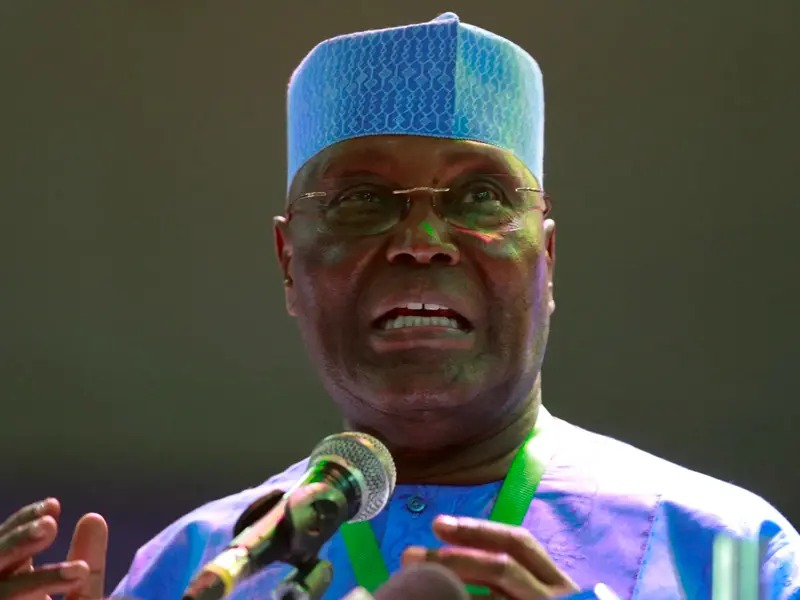 Former Vice President Atiku Abubakar has expressed concerns over Nigeria’s 2025 budget, which he claims lacks the necessary structural reforms and fiscal discipline to address the country’s economic challenges. In a statement assessing the recently presented budget by President Bola Tinubu, Atiku described the fiscal plan, amounting to N48 trillion with a revenue forecast of N35 trillion and a deficit exceeding N13 trillion (or 4% of GDP), as a continuation of ineffective fiscal practices.
Atiku, the former Peoples Democratic Party (PDP) presidential candidate, pointed out several issues with the budget:
- Weak Budgetary Foundations: He noted the underperformance of the 2024 budget, with less than 35% of allocated capital expenditure for Ministries, Departments, and Agencies (MDAs) disbursed by Q3 of the fiscal year. This raises concerns about the government’s ability to execute the 2025 budget effectively.
- Disproportionate Debt Servicing: With N15.8 trillion allocated for debt servicing (33% of total expenditure), nearly equal to the capital expenditure of N16 trillion (34%), Atiku warned that this imbalance would likely reduce investments in key sectors such as defence, infrastructure, education, and health, perpetuating a cycle of borrowing and debt accumulation.
- Unsustainable Government Expenditure: The recurrent expenditure remains disproportionately high, with over N14 trillion (30% of the budget) allocated to running the government. Atiku emphasized that without measures to curb wastefulness and enhance public spending efficiency, there would be insufficient resources for development.
- Insufficient Capital Investment: After accounting for debt servicing and recurrent expenditure, the remaining capital spending (25% to 34% of the budget) would not be enough to tackle Nigeria’s infrastructure deficit or stimulate economic growth. This amounts to an average capital allocation of about N80,000 ($45) per capita, which Atiku deemed inadequate for a country facing slow growth and infrastructural underdevelopment.
- Regressive Taxation: The increase in the Value Added Tax (VAT) rate from 7.5% to 10% was criticized by Atiku as a measure that would further strain the already struggling populace, exacerbating the cost-of-living crisis and hindering economic growth.
Atiku concluded that the 2025 budget, as it stands, would not address Nigeria’s deep-rooted economic challenges. He urged the government to prioritize reducing inefficiencies in public operations, addressing contract inflation, and adopting a more sustainable and growth-oriented fiscal policy to enable the country’s economic recovery.