Ban on Peter Obi – Lawyers Lament the Irony of How Monday Okpebholo Became Edo State Governor Over Three Accomplished Legal Practitioners, Olumide Akpata, Asue Ighodalo and Kadiri Asamah
Ifeanyi Agwuncha, Esq, a Nigerian Lawyer has stirred up sharp debate following the ban placed on Peter Obi by Governor Monday Okpebholo of Edo State. Agwuncha, Esq. in a fakebook post condemned the reported threat and ban issued by Governor Okpebholo, against former presidential candidate, Mr. Peter Obi.
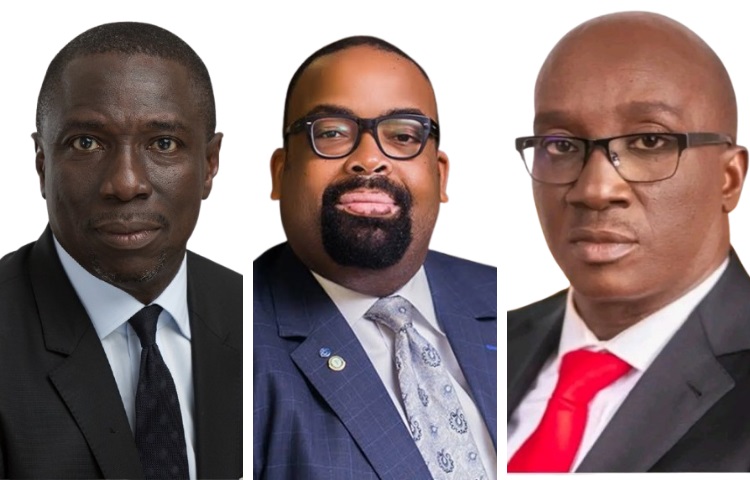
Agwuncha highlighted what he described as a painful irony: that Okpebholo, despite his evident limitations, was declared winner of the 2024 Edo State governorship election over three of Nigeria’s most distinguished legal minds—Olumide Akpata, Asue Ighodalo, and Kadiri Asamah, SAN.
Reacting to Governor Okpebholo’s recent threat to Peter Obi, Agwuncha described the episode as part of a pattern of “embarrassing public performances,” recalling how the Governor had previously struggled to pronounce simple figures during a budget presentation before the Edo State House of Assembly.
“The irony,” Agwuncha wrote, “is that he defeated very accomplished seasoned professionals to become Governor, in the results as announced by INEC and validated by the Courts.”
Agwuncha went on to detail the exceptional profiles of those defeated by Okpebholo in the gubernatorial race. “Asue Ighodalo, the PDP candidate, is a top-tier commercial lawyer and founding partner of Banwo & Ighodalo, one of Nigeria’s leading law firms. His record in corporate law is outstanding, and his running mate was a former Secretary to the State Government. Olumide Akpata, the Labour Party candidate, is a former President of the Nigerian Bar Association and a senior partner at Templars, another elite firm. His running mate was Prince Kadiri Asamah, SAN, a respected silk and seasoned practitioner.”
“These are the men Monday beat to become Governor—men he cannot hold a candle to,” Agwuncha remarked, calling the outcome “the bewildering aspect of Nigeria’s electoral process, where the ideal leader is rejected and the one who should be learning is handed the reins of power.”
The post sparked a flurry of responses from lawyers and public commentators. Vincent Adebayo Àdòdó remarked, “We all know what happens in elections in Nigeria,” hinting at the dysfunction of the electoral system. Mustapha Shaba Ibrahim and others took note of Agwuncha’s deliberate phrasing—“in the results as announced by INEC”—as an indirect indictment of the credibility of the process. Paul Alobi Nyambi added, “What an irony! That’s why decent people are avoiding elections in Nigeria.”
Echikamma Ejido’s comment stood out for its striking clarity: “Mediocrity, like war, leaves a nation in ruins,” a sentiment that captured the widespread frustration with Nigeria’s political culture, where competence is routinely sidelined.
Kachi Okezie tied the controversy to a broader crisis of leadership and governance in Nigeria: “While Patriots were presenting a proposal for a new Constitution, a State Governor was out there urinating on the one he swore to uphold. The problem is not the Constitution—it’s the quality of those entrusted with it.”
The judiciary also came under fire, with Onyema Godspower Ikenna stating, “The judges ruled in his favour, but they are part of the rot. They twist justice in broad daylight.” Odenigbo Chidi Anyaeche went as far as calling for the disbandment of the legal profession in Nigeria, saying the system has failed and must be rebuilt from scratch.