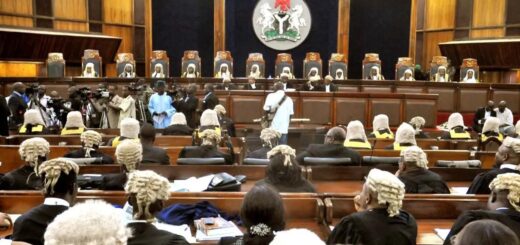
“Cases Become Academic By The Time They’re Decided” — Falana Warns Courts To Act On Emergency Rule Or Risk Collapse Of Democracy
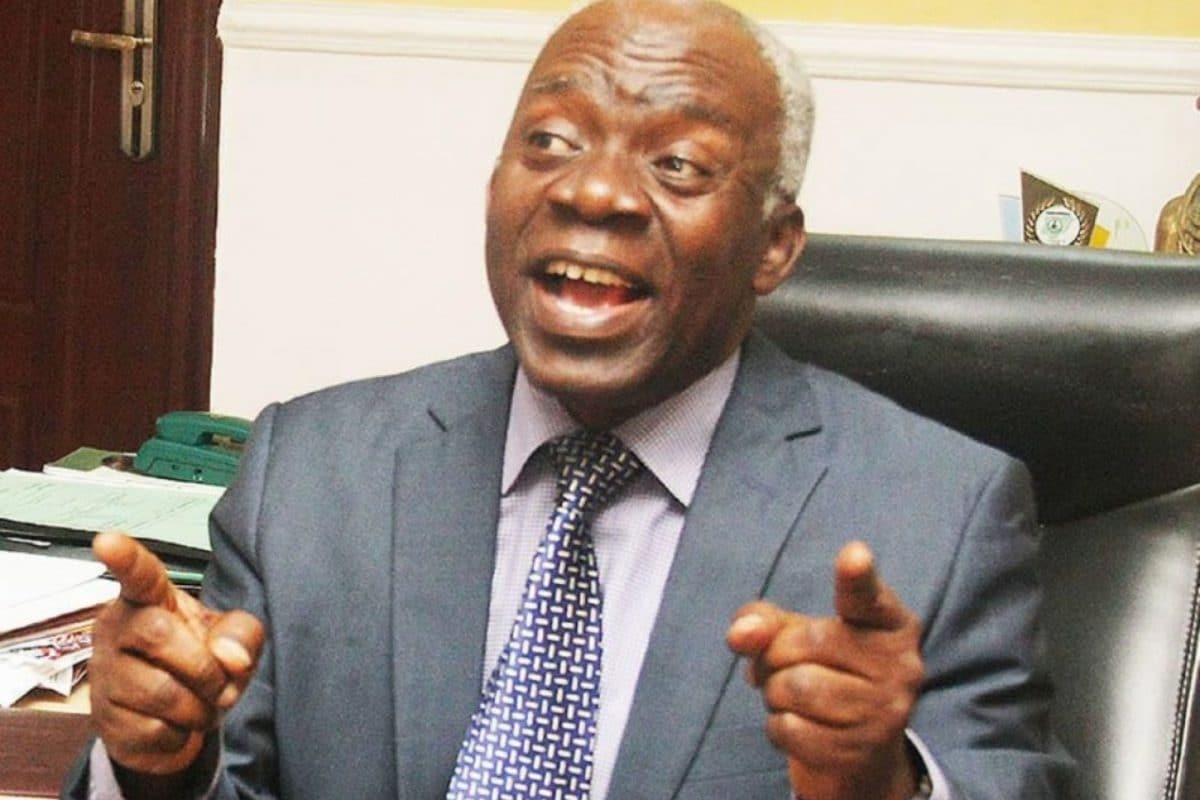
Human rights lawyer and Senior Advocate of Nigeria, Femi Falana, SAN, has issued a strong warning that Nigerian courts must urgently intervene in serious constitutional violations, particularly regarding the imposition of emergency rule, or risk plunging the country into a democratic crisis.
Speaking during a Arise TV interview on Wednesday while discussing the case of 70 pardoned soldiers, Falana criticized the judiciary for failing to make timely pronouncements on constitutional infractions, warning that Nigeria operates “in an atmosphere of grand impunity” where “the rule of law is hardly observed by governments.”
Falana specifically challenged the constitutional basis for emergency rule in Rivers State, arguing that no section of the Nigerian Constitution empowers the president to suspend elected officials during a state of emergency.
“Nobody, no lawyer, including those who are supporting emergency rule has pointed to any section of the constitution that allows the president to impose a state of emergency to the extent of removing or suspending elected officials,” Falana stated.
He explained that Section 305 of the Constitution only empowers the president to “impose a state of emergency to adopt extraordinary measures to restore law and order,” but nowhere does it state that the president can suspend governors, “even for one day.”
The human rights lawyer accused Nigerian courts of systematic delays that render constitutional cases academic by the time they are decided.
“What is going on in Nigeria is that all the cases in court on the emergency rule will not be decided until the restoration of the governor and by the time the democratic structures are now put back in place, you then be told by our court, ‘oh these cases have become academic, the court does not engage in academic exercises,’” he said.
Falana warned that this pattern of judicial delay has created a dangerous precedent, noting similar cases in 2002, 2004, and 2006 in Plateau State where emergency rule was imposed without definitive court rulings on constitutional limits.
Drawing comparisons with the United States, Falana argued that strong judicial intervention is essential for democratic survival.
“Take for instance in the United States of America, President Donald Trump would have turned that country into a complete third world nation but for the courts, but for the intervention of the courts,” he observed.
He emphasized that unlike Nigeria, such cases in developed democracies “will not have to last for 3 months, 6 months” before resolution.
Falana issued a stark warning about the consequences of continued judicial inaction on constitutional matters.
“For me our courts must stand up this time around. It’s not about President [Tinubu] or Governor Fubara. We must know where we stand. We cannot operate a democratic system of government where the courts will not make pronouncements on very serious infractions of the constitution, otherwise we’re going to be in crisis,” he declared.
The senior advocate also criticized the current state of governance in Nigeria, describing it as reminiscent of military rule.
“It is as if we’re still under a military dictatorship in many instances,” Falana said, calling for urgent judicial intervention to restore constitutional order.