“Court of Appeal Upholds Forfeiture of ₦1.58bn Linked to NIRSAL Fraud”
 The Court of Appeal in Abuja has upheld the final forfeiture of ₦1.582 billion to the Federal Government, a sum tied to financial misconduct involving former NIRSAL Managing Director, Aliyu Abbati Abdulhameed, and a private consultant, Steve Ogidan.
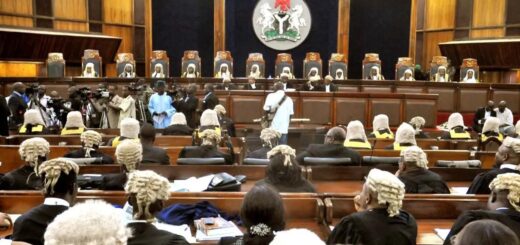
In a unanimous decision delivered on Friday, a three-member panel led by Justice Okon Abang dismissed the appeals filed by both Abdulhameed and Ogidan. The panel affirmed the January 22, 2025 ruling of the Federal High Court, Abuja, which had ordered the permanent forfeiture of the funds.
Justice Inyang Ekwo of the trial court had granted the EFCC’s application for final forfeiture, citing overwhelming evidence—including the fact that one of the appellants had voluntarily refunded a substantial portion of the funds through the EFCC.
The case, marked Suit No: FHC/ABJ/CS/1686/2023, stemmed from an EFCC investigation into alleged bribery, breach of trust, and money laundering related to NIRSAL’s Project Monitoring, Reporting and Remediation Offices (PMROs).
Ogidan, who served as National Coordinating Consultant for PMROs, was accused of collecting kickbacks from field consultants he was supposed to oversee. Abdulhameed, at the time, was Managing Director of NIRSAL, the Nigerian Incentive-Based Risk Sharing System for Agricultural Lending.
According to EFCC spokesman Dele Oyewale, the funds were traced to illicit consultancy dealings and were proceeds of corruption disguised as payments for services.
Ogidan, however, challenged the forfeiture, insisting the money represented lawful earnings by his firm, Successory Nigeria Ltd, under a valid consultancy contract between 2017 and 2022. He claimed to have secured loans to repay the funds and alleged coercion by the former EFCC Chairman, Abdulrasheed Bawa, along with political and ethnic victimization.
In response, EFCC investigator Mubarak Isa submitted a counter-affidavit, denying any coercion and confirming that both the refund and Ogidan’s statements were voluntarily provided. The EFCC also stated that Ogidan’s legal team had previously requested an out-of-court settlement and case compounding, further justifying the forfeiture.
Represented by Faruk Abdullah, the EFCC argued that the funds had no legitimate basis and were clearly derived from corrupt activities. The appellants’ argument that Section 17 of the Advance Fee Fraud Act was wrongly applied was also rejected by the appellate court.
In its final ruling, the Court of Appeal found that the evidence, particularly the voluntary refund and the request for settlement, fully supported the trial court’s decision to forfeit the funds to the government.