INEC Chair Yakubu Confirms Full Implementation of 13 ECOWAS Recommendations as Regional Delegation Visits to Assess Post-2023 Election Reforms
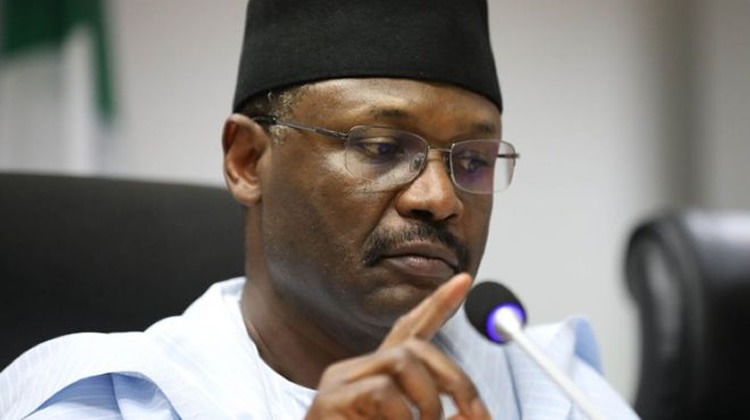 The Chairman of the Independent National Electoral Commission (INEC), Prof. Mahmood Yakubu, said on Monday that the Commission is implementing key recommendations from international election observers to improve future elections in Nigeria.
Speaking in Abuja during a meeting with members of the ECOWAS Network of Electoral Commissions (ECONEC), Yakubu stated that the suggestions made by ECOWAS observers who monitored the 2023 general elections are part of INEC’s comprehensive 142-point reform proposal. This document, developed through wide consultations with critical institutions and stakeholders, is already available on the Commission’s website.
The ECONEC team is in Nigeria to assess how the Commission has implemented the recommendations made by the ECOWAS Election Observation Mission (EOM) following the last general elections. The delegation is led by Mrs Davidetta Browne-Lansanah, Chairperson of Liberia’s National Elections Commission and head of the post-election follow-up mission.
Yakubu expressed appreciation to ECOWAS for consistently supporting democratic growth in the region through the deployment of follow-up missions led by heads of electoral commissions. He noted that Nigeria has participated in similar missions across West Africa, including a recent one in The Gambia.
Describing the current visit as a routine but crucial exercise, Yakubu said, “Election observation missions always publish their findings and recommendations, followed by visits like this to track their implementation. We are glad ECOWAS acknowledges that elections are a multi-stakeholder responsibility.”
He explained that ECOWAS made 37 recommendations after Nigeria’s 2023 general elections. Thirteen were directed at INEC, while the remaining 24 were addressed to institutions such as the National Assembly, the Nigeria Police Force, the National Broadcasting Commission (NBC), the National Information Technology Development Agency (NITDA), civil society groups, the Nigeria Union of Journalists (NUJ), and political parties under the Nigeria Inter-Party Advisory Council (IPAC).
Yakubu revealed that INEC has reviewed and taken administrative steps on all 13 recommendations under its purview, while awaiting legislative amendments by the National Assembly where necessary. He added that the Commission has documented its responses to each recommendation in the 142-point reform package.
“All related documents, including the 2023 General Election report and our reform recommendations, are publicly available on our website. Hard copies have also been included in your information packs for this meeting,” he said.
Mrs Browne-Lansanah said the delegation’s visit was a peer-review exercise, aimed at assessing how INEC addressed the challenges observed during the 2023 elections and whether the Commission has found effective solutions. She noted that the visit is not only beneficial to Nigeria but also to election bodies across the region, as they share similar challenges.
She praised INEC’s role in supporting Liberia’s electoral body, highlighting how Nigeria’s assistance through ECONEC enabled Liberia to establish an ICT room for election operations. Visibly emotional, she expressed gratitude to Prof. Yakubu and the INEC team for their consistent support.
“This mission is to learn. We want to understand what happened, how challenges were tackled, and how those lessons can help strengthen our own systems,” she said.