Obasanjo Slams Lawmakers: ‘Constituency Projects Are Daylight Robbery’
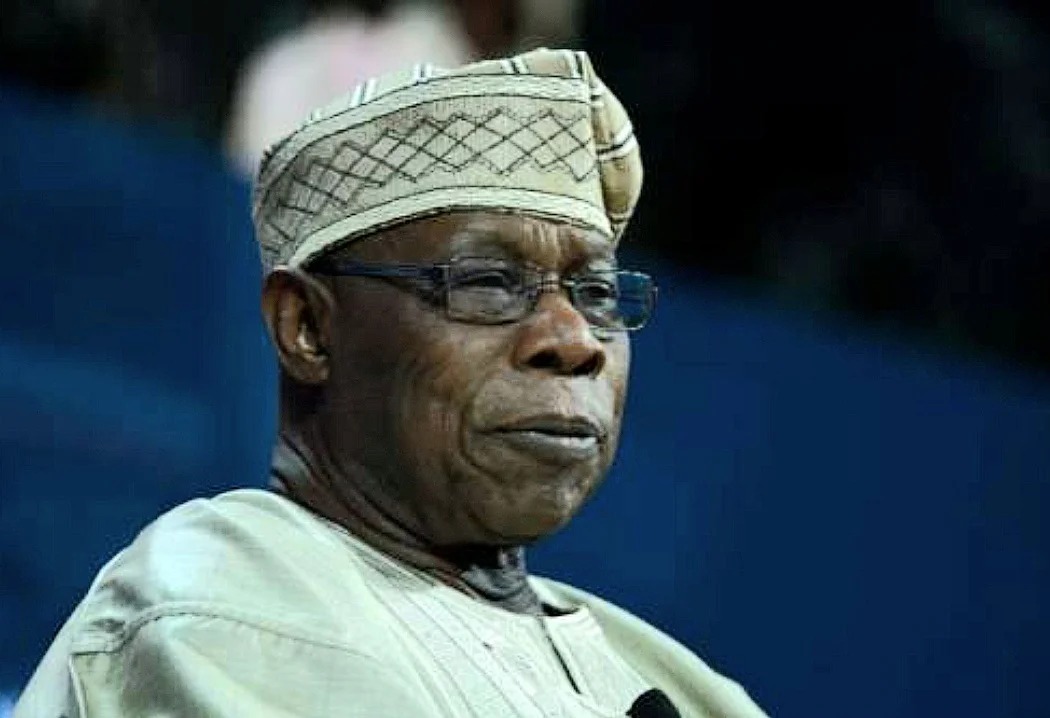
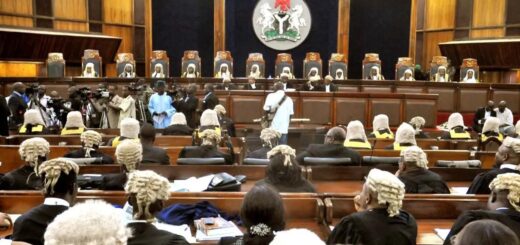
Former President Olusegun Obasanjo has launched a scathing critique of Nigerian lawmakers, accusing them of institutionalizing corruption through the controversial practice of constituency projects, which he described as “daylight unarmed robbery.”
The former president made these assertions in his recently released book, “Nigeria: Past and Future – Contemplations on Nigeria’s History and Vision for Tomorrow.” In Chapter Seven of the book, titled “Lawmakers at Federal and State Levels,” Obasanjo delves into his personal experiences with the National Assembly during his time as both military ruler and democratically elected president.
Obasanjo paints a grim picture of Nigeria’s legislative arms, asserting that the current generation of lawmakers is “much worse” than their predecessors in the First, Second, and Third Republics. According to him, the legislature has become a vehicle for self-enrichment, rather than nation-building.
“Constituency projects by lawmakers at both national and state levels are nothing short of daylight unarmed robbery. All those involved should be treated as criminals,” he wrote.
Obasanjo recalled his struggles to establish the Economic and Financial Crimes Commission (EFCC), noting that it took the National Assembly nearly 18 months to pass the EFCC establishment bill. He alleged that lawmakers deliberately stalled and watered down the bill out of fear that, if passed in its original form, many of them would be prosecuted once out of office.
“Some of them openly admitted that if they passed the original bill, most of them would land in jail after their tenure. I had to assent to the diluted version because I was warned that sending it back to them would kill the bill entirely.”
He further accused lawmakers of mutilating other key legislation to serve their selfish interests. One such case, he said, was the Niger Delta Development Commission (NDDC) bill. According to Obasanjo, the bill was initially designed for joint funding by oil companies, the federal government, and oil-producing states. However, he claimed that some state governments bribed federal legislators to remove state-level contributions from the law.
Obasanjo didn’t mince words in criticizing lawmakers for what he described as the unconstitutional and self-serving determination of their own salaries and allowances. He accused them of setting aside constitutional provisions and awarding themselves “obscene” pay packages that outstrip those of lawmakers in many developed countries.
“In our Constitution, no group is allowed to fix its own salaries. Yet, our lawmakers did just that—granting themselves outrageous allowances that make them among the highest-paid legislators in the world.”
He recounted resisting such budgetary excesses during his presidency by refusing to release certain funds, despite threats of impeachment. “If they had the power to abuse the law, I had the power to hold the purse and check their excesses,” he said.
A significant portion of Obasanjo’s critique focused on constituency projects—programs often promoted by lawmakers as community-based initiatives but widely criticized for their lack of transparency and accountability.
Obasanjo claimed these projects are inserted unilaterally into the national budget without executive consultation or alignment with broader development goals, thereby distorting the fiscal plan and pushing the nation into deficit.
“The budget becomes a joke once these illegitimate insertions are allowed. They disrupt planning and execution. In my time, the process was at least disguised, with lawmakers working through ministries. Today, it’s done openly, with impunity, especially under the Buhari administration.”
He accused lawmakers of colluding with ministry officials in the past to siphon funds, adding that any minister caught engaging in such activities during his tenure was swiftly sanctioned.
“That was the case with one of my Ministers of Education. I did not tolerate such behavior. But today, there is no pretence. It is blatant.”
Obasanjo also took aim at what he called the misuse of legislative oversight functions. According to him, many oversight visits conducted by legislative committees have devolved into mere opportunities to extort money from government ministries, departments, and agencies.
“They visit ministries not to assess progress, but to collect envelopes. It has become a routine of institutionalized extortion. It is shockingly bad.”
In sum, Obasanjo’s book offers a damning assessment of Nigeria’s legislative bodies at both the federal and state levels. He argues that rather than serving as a check on executive excesses or a voice for the people, many lawmakers have become obstacles to progress, focused more on personal enrichment than national development.
He expressed regret that the current state of legislative affairs presents little hope for reform or accountability.
“There is no redeeming feature in the current legislature that reflects the Nigeria of our dreams as envisioned in our Constitution.”