Victory for Emefiele as Appeal Court Overrules Final Forfeiture, Demands Retrial
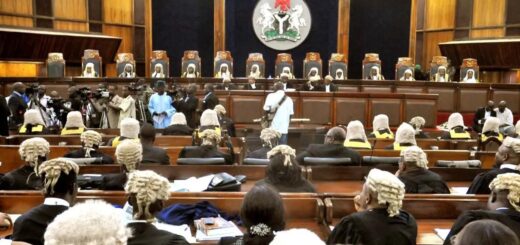
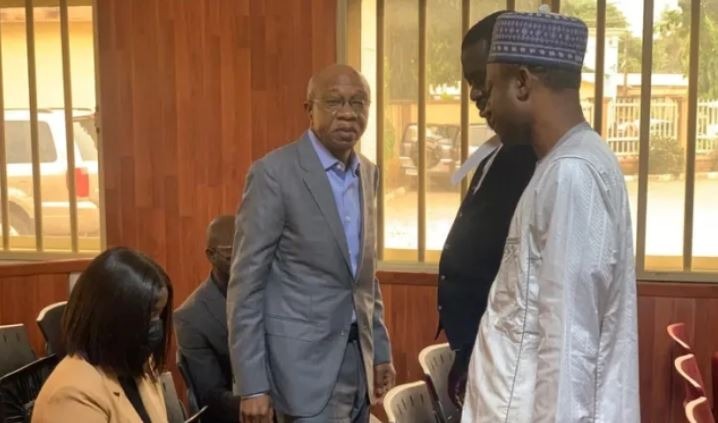 In a dramatic legal reversal, the Court of Appeal in Lagos has nullified the final forfeiture of assets linked to former Central Bank of Nigeria Governor, Godwin Emefiele, and ordered a full retrial at the Federal High Court.
The appellate court’s majority decision, delivered on April 9, 2025, by Justices Abdulazeez Anka and Mohammed Mustapha, sided with Emefiele’s appeal, effectively dismantling the earlier judgment that handed the Economic and Financial Crimes Commission (EFCC) ownership of a range of properties and cash allegedly linked to corrupt practices. Justice Danlami Senchi dissented.
The Federal High Court had, on November 1, 2024, granted the EFCC a final forfeiture order over several luxury properties in Lagos and Delta State, $2,045,000 in cash, and shares in Queensdorf Global Fund Limited. The anti-graft agency argued that the assets were proceeds of unlawful activities during Emefiele’s tenure at the apex bank.
But Emefiele, through his lead counsel Olalekan Ojo, SAN, challenged the forfeiture, accusing the trial court of glossing over critical affidavit evidence and denying him fair hearing. He also took issue with the court’s interpretation of jurisdiction and its refusal to pause proceedings to allow for a proper defence.
EFCC’s counsel, Rotimi Oyedepo, had pushed back, insisting Emefiele failed to provide credible proof of legitimate acquisition. He pointed out that the properties were registered under companies unrelated to Emefiele, and those companies neither contested the forfeiture nor defended ownership.
However, in a firm and detailed lead judgment, Justice Anka held that Emefiele’s financial profile — including severance benefits from Zenith Bank, earnings from Central Bank service, and stockholdings — was substantial enough to explain ownership of the assets. He ruled that the case required a full trial, with oral testimony and cross-examination, to resolve the deeply contested evidence. Nonetheless, he upheld the forfeiture of the $2,045,000, noting that Emefiele had not opposed that portion of the EFCC’s claim.
Justice Mustapha, concurring, noted there was no legal prohibition against acquiring properties in trust and emphasized the need for a closer look at the timelines of asset declarations versus acquisitions. He argued that civil forfeiture should not have preceded criminal proceedings, and also supported the case being retried before a new judge.
Justice Senchi, dissenting, held a starkly different view. He insisted there was no conflicting affidavit evidence warranting a retrial and stressed that the companies whose assets were forfeited had not challenged ownership. In his opinion, Emefiele failed to prove any legal or beneficial interest in the disputed properties. He voted to uphold the original forfeiture order.
With the split decision now setting aside the earlier judgment, the matter returns to the Federal High Court for a full-scale trial that promises to reveal more about the controversial wealth and dealings of the embattled former central bank governor.