Court Orders Nigeria Police To Pay Citadel CEO Benjamin Joseph N10m, Apologise Over Unlawful Arrest, Detention In Zinox Dispute
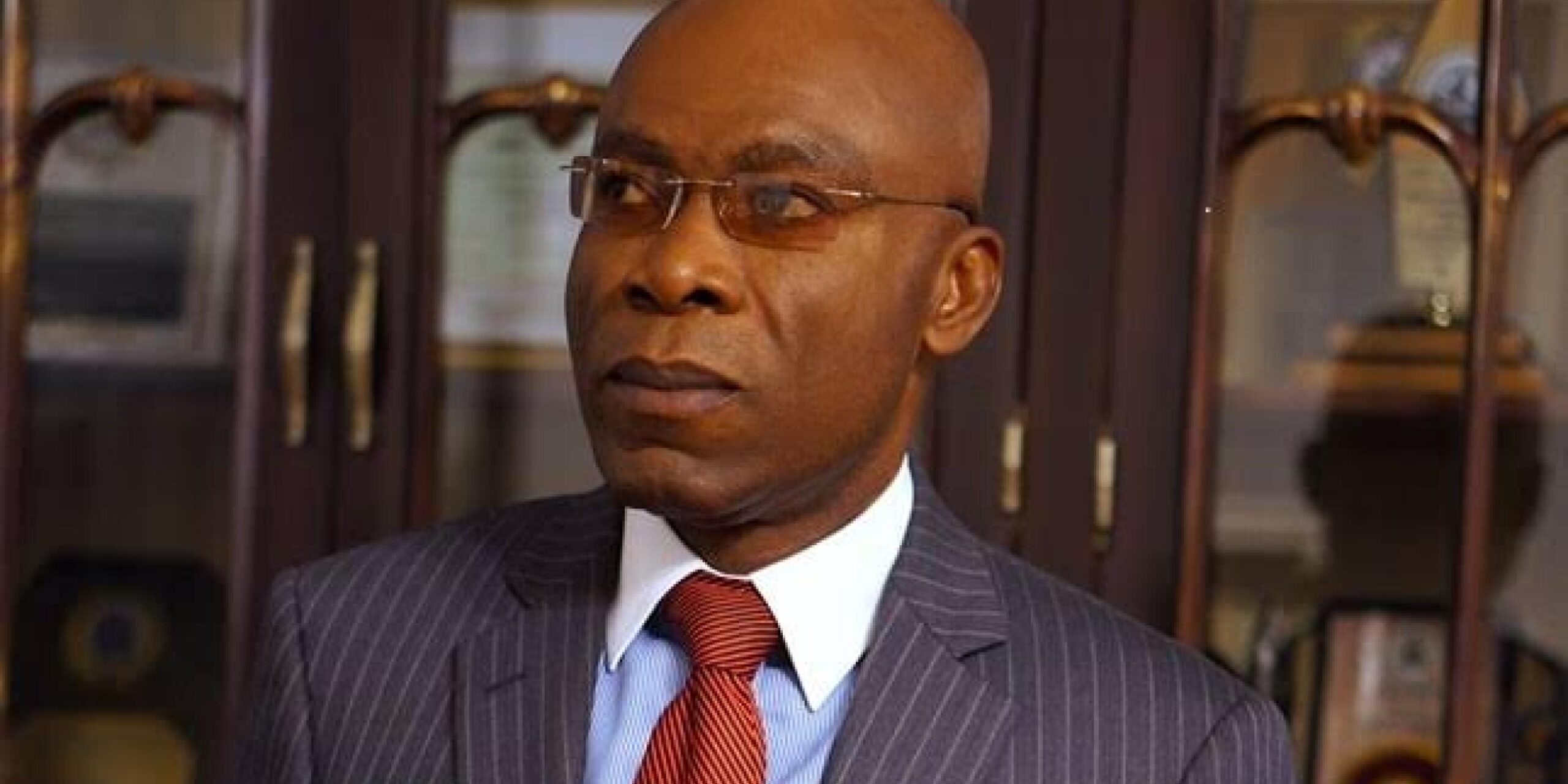
The High Court of the Federal Capital Territory, Abuja, has awarded ₦10 million in compensation to the CEO of Citadel Oracle Concepts Limited, Mr Benjamin Joseph, after declaring his arrest and seven-day detention by the Nigeria Police Force in January 2024 unconstitutional and unlawful.
The court also ordered the Inspector-General of Police and the Nigeria Police Force to publish a written apology to Joseph in a national newspaper within 14 days. It further set aside a remand order obtained five days after his arrest, ruling that it could not retrospectively legalise his detention.
However, the court struck out the suit against Zinox Technologies Limited and the Attorney-General of the Federation, holding that Joseph failed to provide sufficient evidence linking either of them to the violation of his fundamental rights.
The judgment was delivered on October 28, 2026, by Justice Mohammed Zubairu of the High Court of the FCT, Nyanya Judicial Division, in suit number CV/2757/24.
Court Finds Police Failed To Justify Arrest, Detention
Joseph had instituted the fundamental rights enforcement suit against Zinox Technologies, the Inspector-General of Police, the Nigeria Police Force and the Attorney-General of the Federation, challenging his arrest on January 25, 2024, and detention until February 1, 2024.
He alleged that Zinox orchestrated his arrest at the premises of the FCT High Court through police officers, using a private direct criminal complaint.
He also challenged a remand order obtained on January 30, 2024, from a Magistrate Court in Abuja, arguing that it was secured after his arrest and used to justify his continued detention.
Joseph sought ₦5 billion in compensation, public apologies and an order restraining the respondents from re-arresting or harassing him over the same or similar allegations.
In his judgment, Justice Zubairu held that the police failed to establish the legal basis for the arrest, particularly because the only remand order produced in court was issued five days after Joseph had already been taken into custody.
“The Applicant was arrested on 25th January 2024. The only remand order emanating from any court is Exhibit JSO2, the order of the Magistrate Court sitting at Wuse Zone 2, Abuja, dated 30th January 2024,” the judge stated.
“Five clear days therefore separate the commencement of the deprivation of liberty from the only judicial order said to authorise it.”
The judge added that “an order made five days into a detention cannot reach back and validate the five days that preceded it.”
The court also found that the police failed to produce the arrest warrant they claimed had been issued by Chief Magistrate Vincent Gwahemba of Karu, Nasarawa State.
Justice Zubairu said the police relied on a statement in Joseph’s letter of complaint to the Chief Judge of Nasarawa State, rather than producing the alleged warrant.
The letter indicated that Joseph’s representatives were shown a warrant at the Karu court but that the Chief Magistrate had no warrant to give them because the complaint had been forwarded to the Police Area Command in Lafia. It also stated that the magistrate was yet to take cognisance of the complaint.
“First, no warrant was ever produced or exhibited by anyone, least of all the 2nd and 3rd Respondents, who, as the arresting authority, would be its natural custodians and who bore the burden of justifying the arrest,” the judge held.
He added that the police’s failure to produce a document within their custody weighed against their claim that the arrest was authorised.
The judge also identified conflicting accounts of the complaint that led to Joseph’s arrest.
According to the judgment, the January 30 remand order was based on an allegation of cyberstalking under Section 24 of the Cybercrimes Act, while the direct criminal complaint presented in court concerned criminal defamation.
The police documents also gave conflicting explanations about whether the complaint was made by Zinox Technologies or Simon Lough, SAN.
“The remand order, Exhibit JSO2, was granted for the offence of cyberstalking under section 24 of the Cybercrimes Act. Yet the Direct Criminal Complaint said to underpin the whole episode, Exhibit JSO4, is a complaint of criminal defamation,” Justice Zubairu stated.
He added: “These are three different foundations advanced for one detention, and they do not reconcile.”
The judge said the circumstances suggested that the remand order was obtained to provide legal cover for a detention that had already become unlawful.
The court further faulted the police for failing to produce evidence of any meaningful investigation during the seven days Joseph was detained.
Although the police claimed he was held pending investigation, they did not provide an investigation report, a statement obtained from him or records of investigative steps taken during the period.
“The power to detain pending investigation is not a power to detain and call it investigation; it must be shown to have been exercised for a genuine investigative purpose,” the judge stated.
Relying on Section 35 of the 1999 Constitution, Justice Zubairu held that Joseph’s detention violated his right to personal liberty. He noted that where a court of competent jurisdiction is available within a radius of 40 kilometres, an arrested person must be brought before it within one day.
“The Applicant was arrested on 25th January 2024 and held until 1st February 2024. For the first five days of that custody there was no order of any court and no warrant that has been proved to exist,” he held.
“The arrest and the detention of the Applicant between 25th January and 1st February 2024 therefore constituted a breach of his right to personal liberty under section 35 of the Constitution.”
Court Absolves Zinox Technologies, Attorney-General
Despite declaring the arrest and detention unlawful, the court rejected Joseph’s allegation that Zinox Technologies orchestrated the police action.
Zinox, through its counsel, Matthew Burkaa, SAN, denied being the complainant whose complaint led to the arrest, arguing that the complaint relied upon by the police was lodged by Simon Lough, SAN.
Justice Zubairu held that Joseph failed to provide documentary evidence showing that Zinox directed, requested or procured his arrest or had any communication with the police concerning it.
Relying on the Supreme Court decision in Fajemirokun v. Commercial Bank (Credit Lyonnais) Nigeria Ltd., the judge explained that a person who reports suspected criminal conduct to the police cannot automatically be held responsible for an arrest subsequently carried out by the authorities. Liability may arise where the complainant acts in bad faith or is actively instrumental in the arrest.
“The Applicant placed before the Court no document emanating from the 1st Respondent directing, requesting or procuring his arrest, no communication between the 1st Respondent and the Police concerning the arrest, and no evidence tying the 1st Respondent to the officers who effected it,” he stated.
The judge also noted inconsistencies in Joseph’s affidavits over the dates of the alleged Zinox complaint, which were variously stated as October 9, 2023, January 16, 2024, and February 16, 2024.
He said the discrepancies, alongside the differences between the criminal defamation complaint and the cyberstalking allegation in the remand order, weakened Joseph’s case against the company.
“Taking the Applicant’s own case at its highest, what it shows against the 1st Respondent is, at most, the lodging of a complaint. That, without more, is not a wrong, and it does not disclose a cause of action for the breach of the Applicant’s fundamental rights,” the judge ruled.
The court consequently struck out the suit against Zinox for want of a reasonable cause of action.
It also struck out the case against the Attorney-General of the Federation, holding that Joseph’s documents did not establish any involvement by the office in his arrest or detention.
Justice Zubairu noted that the Attorney-General’s office had intervened to withdraw a charge against Joseph, an action he said was in the applicant’s favour.
Police Ordered To Pay N10m, Publish Apology
Although Joseph sought ₦5 billion in compensation, the court awarded him ₦10 million against the Inspector-General of Police and the Nigeria Police Force jointly.
Justice Zubairu said the amount claimed was excessive and unsupported by evidence of financial losses. He said the compensation should instead reflect the circumstances of the unlawful detention, including its seven-day duration and the absence of a court order for the first five days.
“The sum claimed is extravagant and wholly unsupported by any evidence of loss of that order,” he held.
The judge added: “Weighing these matters, I consider that a sum of N10,000,000.00 is a just and sufficient award against the 2nd and 3rd Respondents jointly.”
The court also ordered the police authorities to publish a written apology to Joseph in a national newspaper within 14 days of the judgment.
However, it rejected his request for a perpetual injunction restraining the respondents from re-arresting or detaining him over the same or similar allegations.
The judge said declaring the particular detention unlawful did not prevent the police from carrying out their constitutional and statutory duties to investigate crimes and arrest persons where there is reasonable suspicion.
“The finding that this particular detention was unlawful does not translate into a licence against all future lawful action,” he stated.
In its final orders, the court declared Joseph’s arrest on January 25, 2024, and detention until February 1, 2024, unconstitutional and unlawful, and set aside the January 30, 2024 remand order of the Magistrate Court sitting at Wuse Zone 2, Abuja, to the extent that it purported to authorise his detention.
The police were ordered to pay the ₦10 million compensation and publish the apology, while the suits against Zinox Technologies and the Attorney-General were struck out. The parties were directed to bear their respective costs.
The judgment records that David Okafor appeared for Joseph, Emmanuel Agwungwu represented Zinox Technologies, while Ngosoo T.A. Uchegbu appeared for the Attorney-General. The Inspector-General of Police and the Nigeria Police Force were not represented in court.