Nigeria Reaffirms Commitment to International Court of Justice
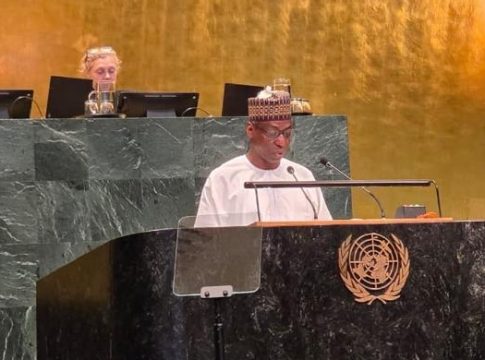
Nigeria has reaffirmed its commitment to the International Court of Justice (ICJ), calling for stronger international support for the Court to enhance the peaceful settlement of disputes and promote respect for international law.
The Permanent Secretary, Ministry of Foreign Affairs, Ambassador Dunoma Ahmed, stated this while presenting Nigeria’s position during the plenary debate on the report of the ICJ at the 81st Session of the United Nations General Assembly in New York.
He commended the Court for its contributions to international peace and security, noting that its activities during the reporting period included 16 orders, one judgment, two advisory opinions and 24 cases on its General List.
Ahmed also welcomed the amendment to Article 78 of the Court’s Rules, which took effect on February 2, 2026, allowing the public disclosure of reports on compliance with provisional measures.
He described the development as an important step towards transparency and accountability, noting that “the public disclosure of reports on compliance with provisional measures” would strengthen confidence in the implementation of the Court’s orders.
Reflecting on Nigeria’s experience with the Court, he recalled the October 10, 2002, judgment on the Land and Maritime Boundary dispute between Nigeria and Cameroon, which was peacefully implemented through the 2006 Greentree Agreement.
Ahmed noted that the experience demonstrated how “international adjudication, when complemented with political will and constructive engagement,” could facilitate the peaceful resolution of complex territorial disputes.
He also highlighted Nigeria’s acceptance of the compulsory jurisdiction of the ICJ under Article 36, paragraph 2, of the Court’s Statute, while acknowledging the contributions of Nigerian jurists, particularly the late Judge Taslim Olawale Elias, who served as President of the Court.
The Permanent Secretary further welcomed the Court’s engagement with Nigeria’s judiciary, including visits by delegations of Supreme Court justices in August 2025 and members of the Nigerian judiciary in July 2026.
He described such exchanges as important in “strengthening national judicial capacity, deepening knowledge of international law and promoting coherence” between international legal principles and domestic judicial practice.
To strengthen the Court’s capacity, Ahmed proposed increased financial support from the United Nations General Assembly to ensure that the ICJ’s resources matched its growing caseload.
He specifically called for support for the Court’s 2027 budget, including the development of an improved case management system to facilitate electronic filing, processing and management of case materials.
Ahmed also urged countries that had not accepted the Court’s compulsory jurisdiction to consider doing so, while encouraging Member States to contribute to the Secretary-General’s Trust Fund to Assist States in the Settlement of Disputes through the ICJ.
He stressed that adequate funding would enable developing countries to access the Court and pursue or defend legal claims, irrespective of their financial circumstances.
Additionally, he advocated stronger collaboration between the ICJ and national judiciaries, particularly in Africa, and called for greater support for the Court’s Judicial Fellowship Programme to provide young lawyers, especially from developing countries, with practical experience in international law.
In his concluding remarks, Ahmed emphasised that compliance with the Court’s decisions was essential to sustaining the credibility of international justice.
The Permanent Secretary stressed that “respecting and complying with the judgments and orders of the ICJ” was necessary to preserve the Court’s authority, uphold the rule of law and strengthen confidence in the international legal order.
He reiterated Nigeria’s commitment to the principles of the United Nations Charter and the peaceful settlement of international disputes in accordance with international law.